
Failure: A Love Story
Synopsis: The play follows Mortimer and the Fail family, presenting their history of love, loss, beginnings, and endings. Set in 1928, it tells the story of how Mortimer comes to love each member of the Fail family just before their untimely deaths. In a time of uncertainty and fear, the artistic team embraced the play’s mid-to-late 20th-century absurdist style not to highlight despair, but to subvert it. Traditionally rooted in existential pessimism, absurdism here becomes a tool for appreciation, guiding the audience to find meaning and beauty in every moment.
Early Design Concept
When approaching this show, I was initially drawn to its absurdist elements. The story, told by a trio of narrators in the style of a Greek chorus, was full of vivid descriptions of past events that were conveyed verbally and through performance. This immediately grabbed me as moments which could be supported heavily by sound, surrounding an audience with the story rather than presenting it to them. This paired well with the repeating presence of a gramophone in the piece, which could bond the worlds of the audience and performers through diegetic and non-diegetic pieces of music.

System Design

Design Statement
Following meetings with the director and artistic team, I further refined the foundation of the design and created a design statement to guide the direction of my work:
My sound design centers on music, clocks, and sonic texture to explore memory and the passage of time. A gramophone underscores both lively dance and quiet loss, reinforcing the balance of joy and sorrow through tinny tones, hisses, and vinyl scratches. Clocks function as literal and symbolic motifs. Ticking and chimes ground the audience in time and place, while resonant strikes mark emotional shifts through memory. Reverb on sound effects creates a distant, echoing quality, blurring past and present to deepen the audience’s connection to love, loss, and remembrance.
With a focused design direction, I then ensured there would be a sound system capable of creating the immersive atmosphere the story needed. With full surround system and upstage effects speakers, the small theatre was prepared to engulf the audience in a soundscape which would reflect the memories and stories being told onstage.


Research
Before fully immersing myself in content creation, it was important to research the period to ensure accuracy in sound effects, ambiance, and music choices. Additionally, this is where I combined pre-existing knowledge of absurdism as a theatrical style to inform choices about intensity and presence of the soundscape. This would result in a design that heightened the story through effects and music that had a presence one would expect in the absurdist style.
Collage
Sound designers can often be unsure of how to best contribute to discussions throughout the production process when other design areas are able to show off preliminary ideas. I believe the strongest method for getting around this uncertainty is creating a collage that represents the show, either through a collection of effects and music that follows the progression of the story or any collage of sounds that feels representative of the piece. Here I have included the collage I presented to the team to contribute to preliminary design meetings.
Recording
As content creation began for the show, it was important to schedule and complete musical recordings. Taking pieces from the period and modifying them through the rehearsal process, we created songs that could play either diegetically when characters turned on the gramophone or as non-diagetic underscoring for narration or emotional beats.
Story of Tragedy
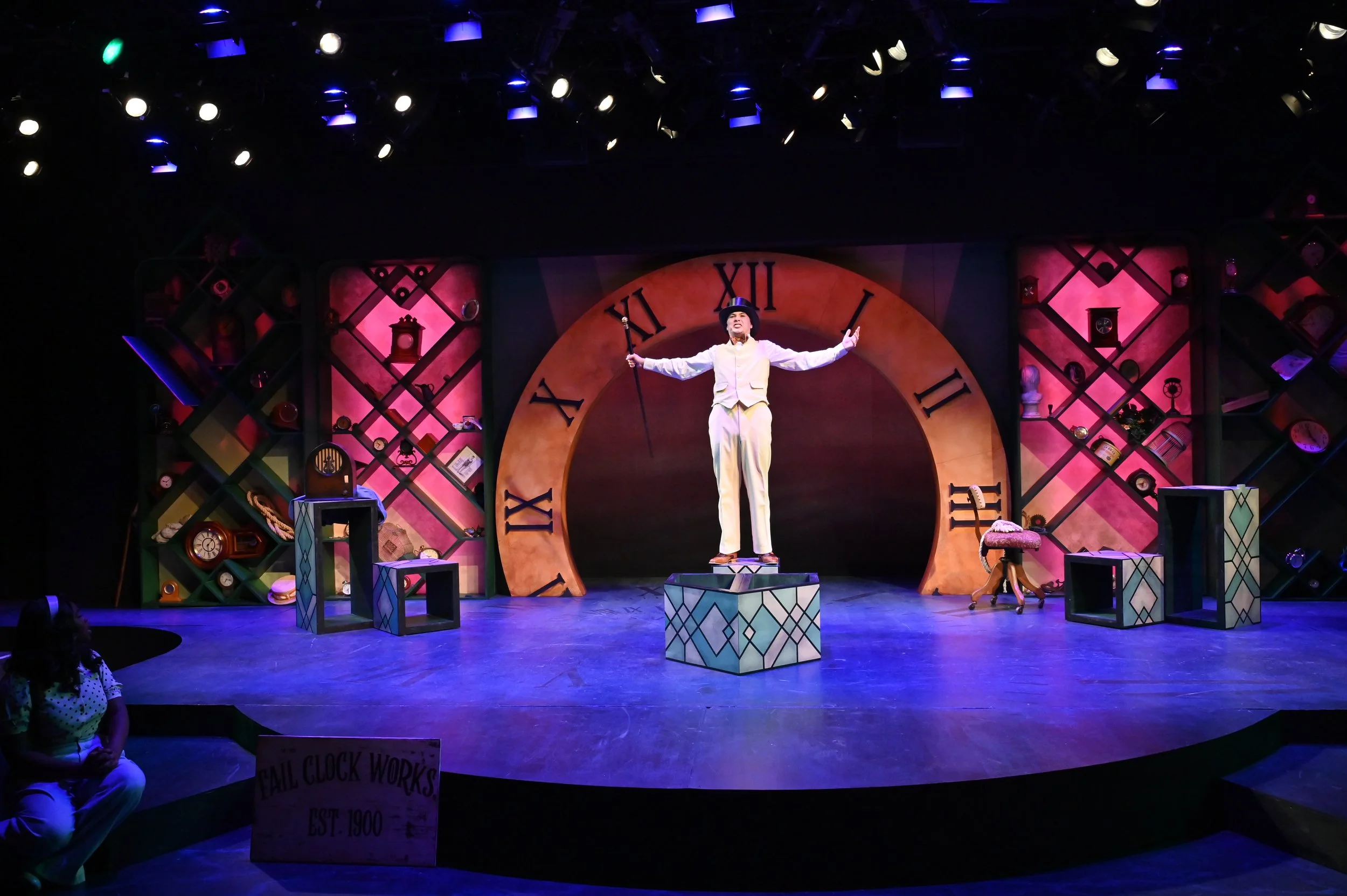
The play opens with a retelling of how the Fail family faced their first tragedy. The soundscape and world, meant to evoke the feeling of a dream, work together to narrate the death of Mr. and Mrs. Fail. In the production, three narrators act as a Greek chorus, bringing the audience through the tale with sound effects punctuating key moments.
Content
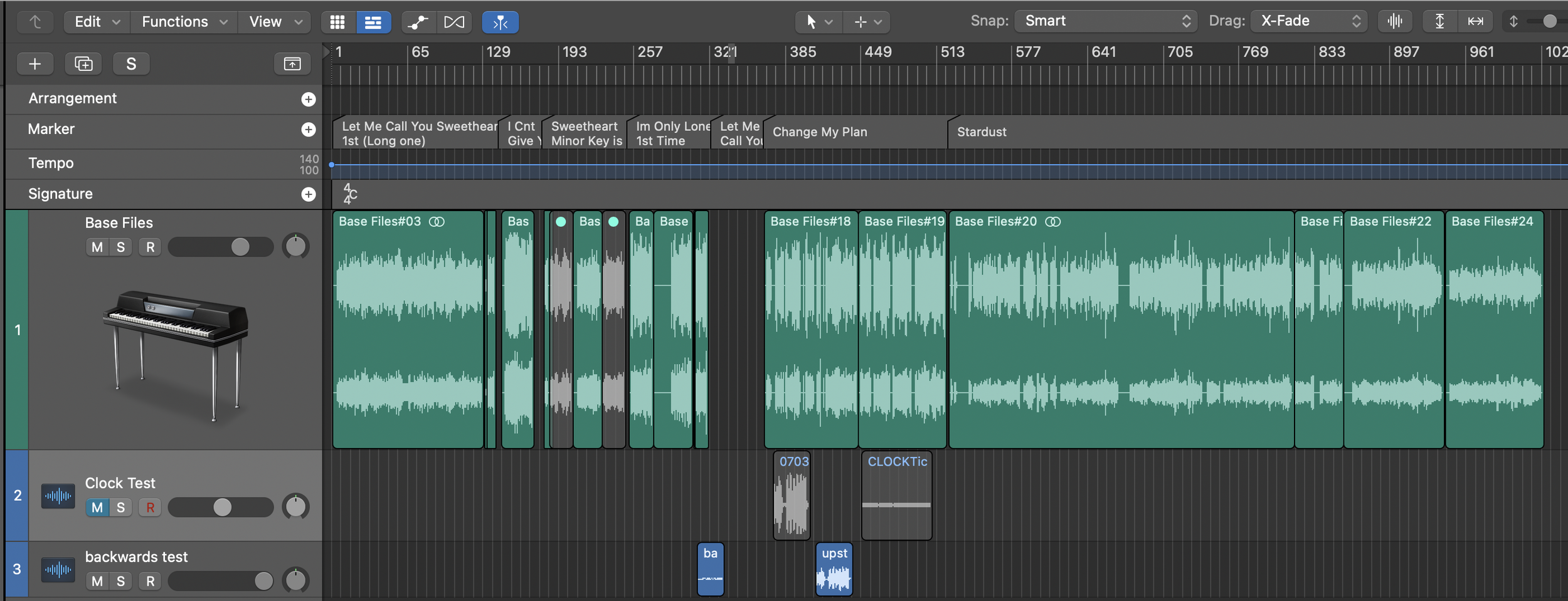
Using insightful discussions with the team, a leading design statement, and research, it was time to begin content creation and programming for the show. QLab was used as the playback software and was programmed in a way that would attempt to automate any sequences possible to reduce the strain on the stage manager, as the production already had a large number of sound and light cues as the story jumped from past to present and into strange, intense dreamscapes.
Q&A
Retelling History
After John N. and Mortimer have both grown old, Mortimer walks out into the river. He feels at peace and wants to return to the water, which will shepherd him to his lost loves. Before he is washed away, many parakeets cover the banks of the river, and he hears music found earlier in the play in his last moments.
A collection of some questions I have been asked about the show and my process.
Mortimer’s Dream
Mortimer has already mourned two of the Fail sisters, both of whom he was in love with. With the third sister, Gerty, on her deathbed, he falls into a dream-like state, his mind trying to come to terms with the possibility of another loss. After a conversation with Gerty in his dream following unsuccessful attempts to alter the past, he is thrust back into the present.
Q: What does Failure mean to me?
A: Failure was my first show upon starting the journey into graduate school. Working with new company members in theatre can always be a bit unnverving, but the script that this show provided quelled many of those feelings. The show reads as funny, thoughtful, and different in a way that grabs your attention. Reading about absurdism when learning theatre history was always an interesting topic to me, so seeing it used to dissect feelings of grief in this Greek-chorus timey-whimey world immediately grabbed my interest.
Q: How did I approach Failure as a sound designer?
A: When picking up the script for the first time, it was dizzying how many opportunities the text presented to create an ever-present soundscape that supported moments of action while reliving a memory. Having the opportunity to consistently play with recreating the noises of events the narrators described and having it be set in a mystical dream-like world is the sound designer's equivalent to being given a large sandbox and told to roam free. Finding these moments of storytelling that could be amplified by sound and then discovering the emotional string to pull on for each scene became a woven blanket of sound for the play, which gave it a life of its own.
Q: What was the outcome of Failure?
A: Failure: A Love Story was a beyond exciting show to work on. The collaboration between the entire team and the wonderful insight of the director created a world that pulled audiences in with spectacle and humor before bringing them low to tears with moments of loss where love had been just moments before. The message of the show ultimately stood out strongly in the climate of today’s world, teaching everyone who interacted with it that loving people is what the human experience is about, loss just comes naturally with that but is neccessary to make love mean something.