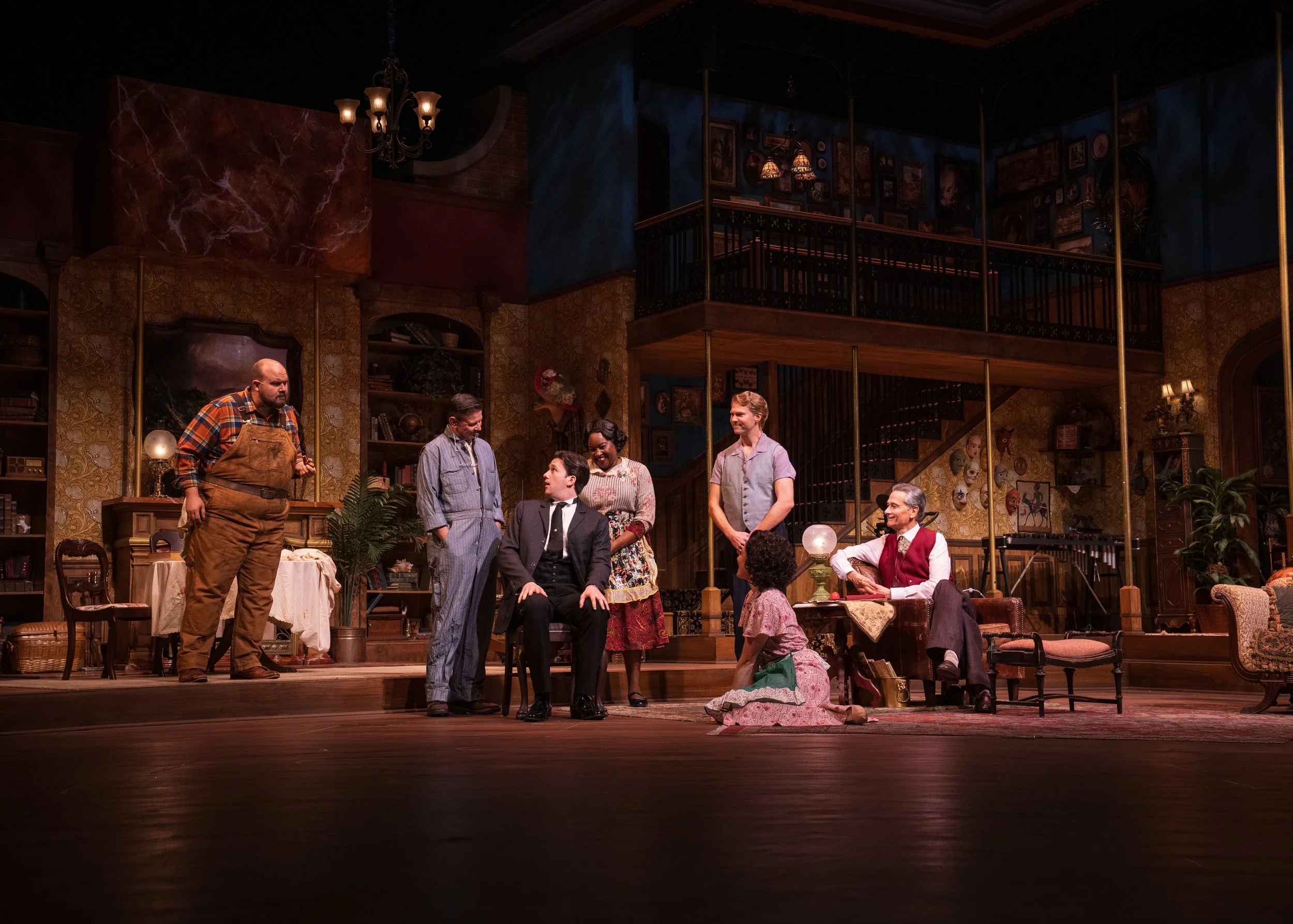
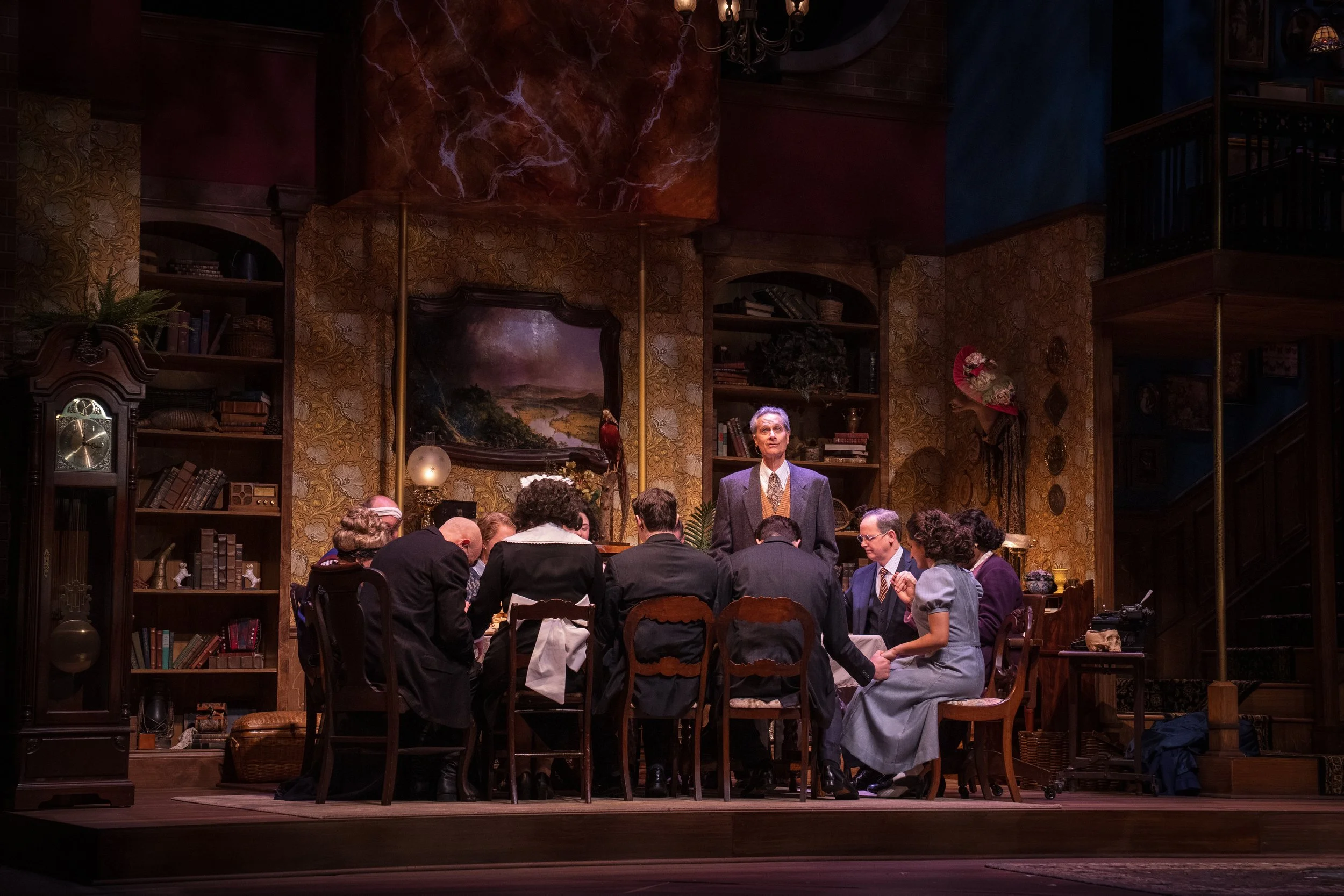
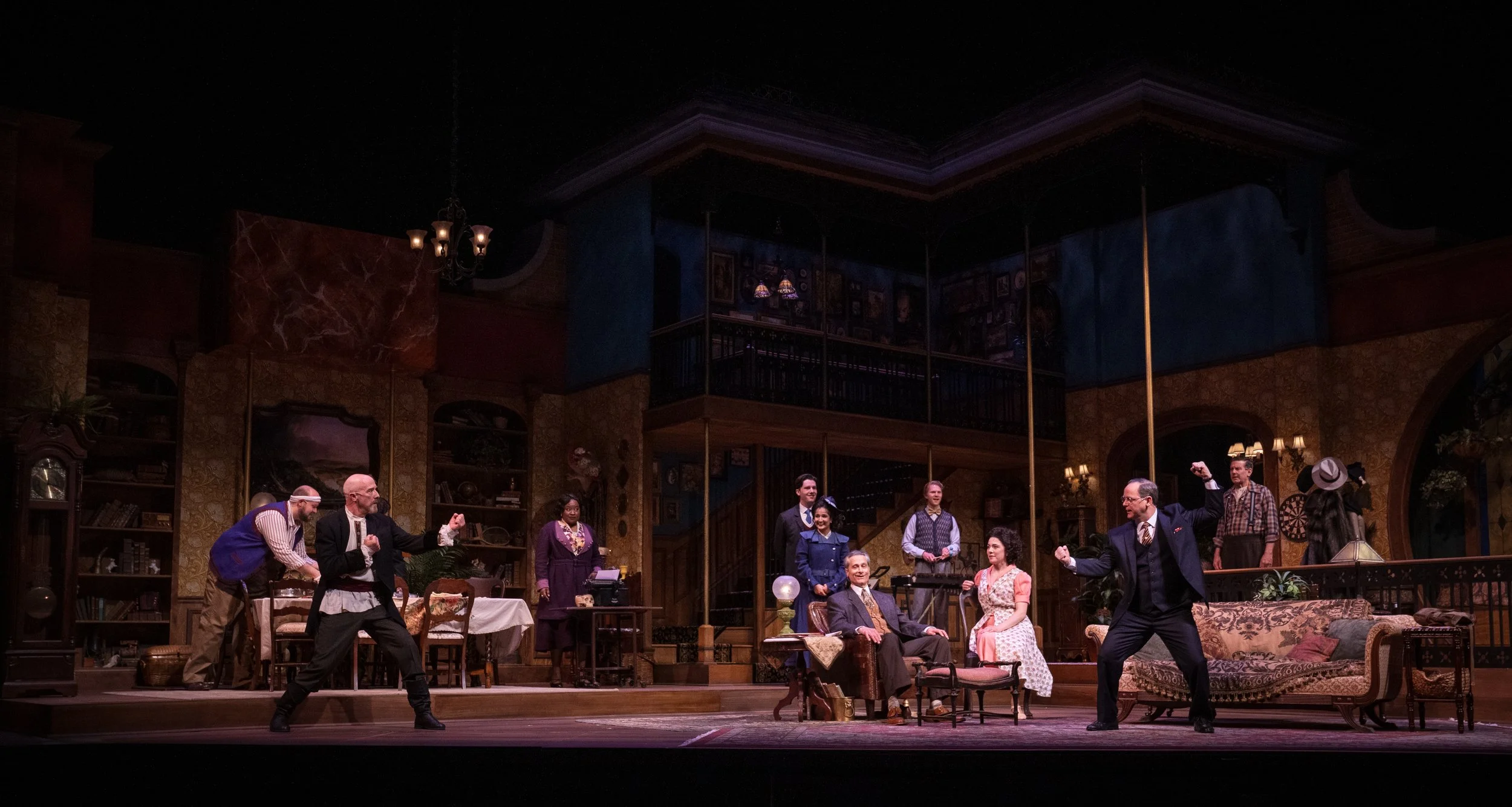
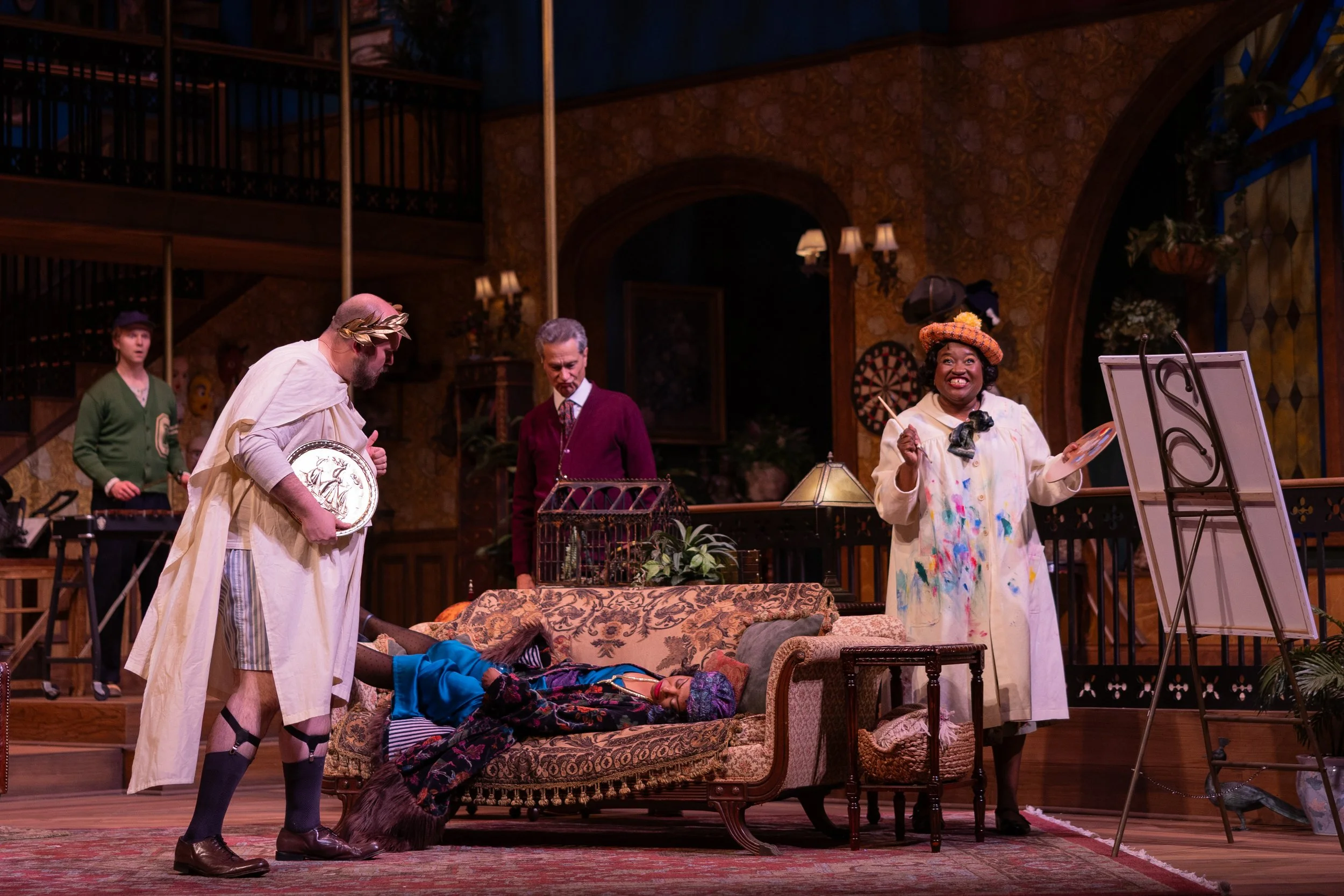
You Can’t Take It With You
Synopsis: The play tells the story of a family who lives a sincere, odd life, which creates conflict when their daughter brings home the exceedingly normal son of a well-known businessman. The play follows these two lovers who have to discover a middle ground in their families and ultimately make his parents understand that her family’s oddities are what make them special and more free than anyone else.
Early Design Concept
When approaching this show, I first analyzed what it was trying to achieve with its soundscape. The script largely used sound as a way to convey door knocks, buzzes, and slams with occasional effects for larger moments such as the firework explosion. This allowed for a variety of choices as the designer, creating a foundation of creativity. The space also needed wireless mics for the performers, so the design needed to be accommodating of live reinforcement.
System Design
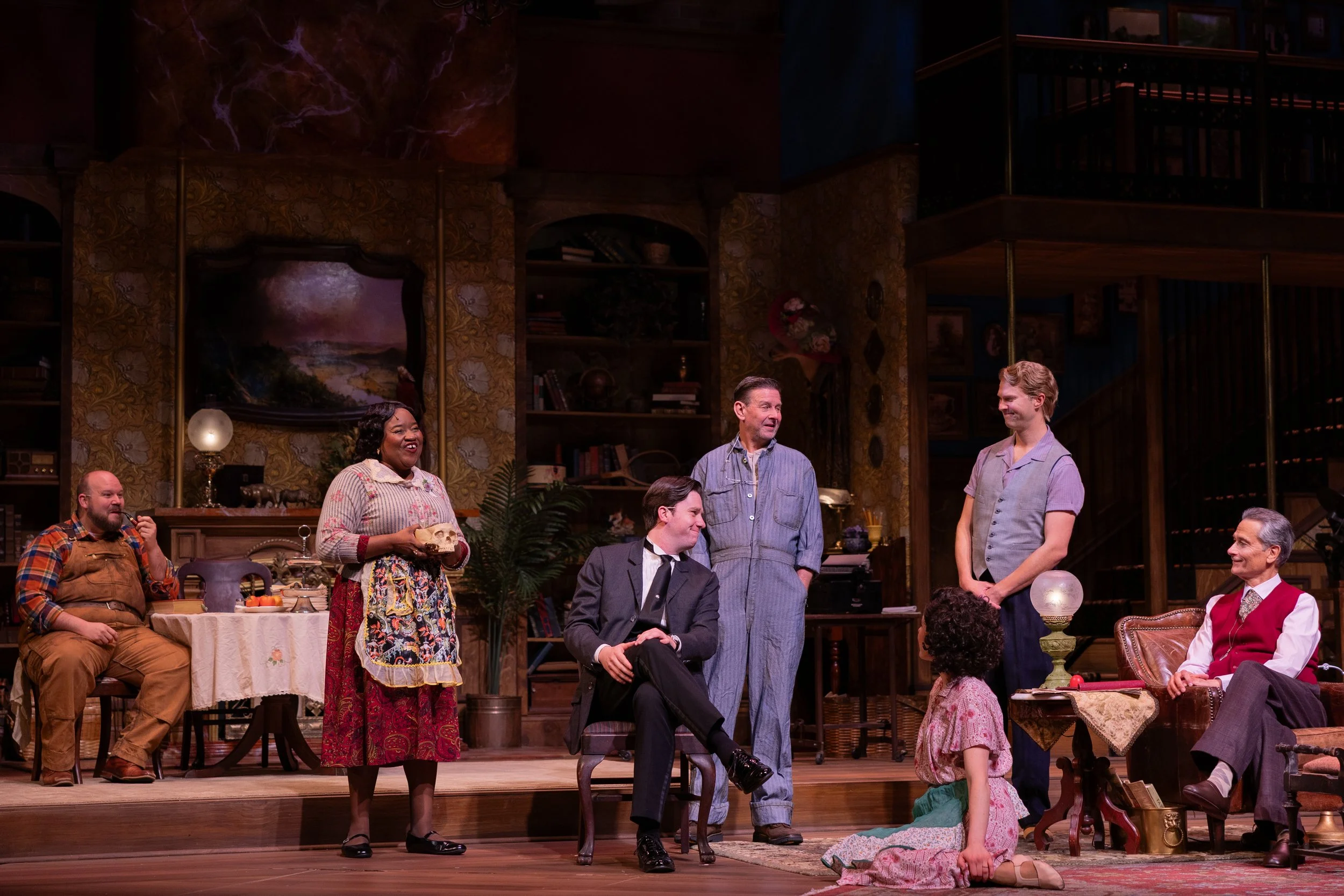
Artistic Team
Director: Melissa Rain Anderson
Lighting Designer: Miguel Santiago
Sound Designer: Chance Beck
Co-Scenic Designers: Ken Martin & Alondra Castro
Costume Designer: Lauren Roark
Design Statement
Following meetings with the director and team, I refined the foundation of the design and created a design statement to guide the direction of my work:
Working on older shows, it can be difficult to add soundscapes into pieces that were written for minimal underscoring or sound effects. Keeping that in mind, my design focused on staying true to the original's vision for the soundscape but updating it to the modern world through a robust sound system and spatial audio integration. Jazz was used as the basis for transitions, as it represents the freedom found in the show and acted as a point of connection between the audience’s love of freedom and the family’s.
For this production, the sound system needed to support a traditional proscenium configuration and onstage effect speakers. It was designed primarily for vocal reinforcement, spatial sound effects, and musical transitions.


Research
Research for this production examined the lifestyle of Americans who lived in similar areas to the family, with particular attention to sourcing sound effects appropriate to the location and period. This era of history also allowed for freedom in music selection, as so many styles existed in the period. Ultimately, jazz stood out as the style most fitting to represent each family member’s unique form of self-expression.

Collage
To help build a shared vision during preliminary design meetings, I created a collage that focuses on the overall feeling of the show and individual elements that I identified as touchstones of the story. This helped greatly to convey to the Director how I viewed the show as we had developed it so far and was effective in keeping us on the same page.
Stem-Splitting
An important part of this show’s process was finding ways to make the music choices as interesting and effective as possible. My preferred way to do this is to embrace the spatialization methods we use for effects and apply them to music. By splitting music into stems of each instrument, I can place them around an audience to craft an environment more effective than the traditional Left/Right + Surrounds approach.
Fireworks
A famous scene from the play, fireworks explode from the basement as the family, visitors, and police panic. This scene needed a constant, loud sound effect that worked with lighting to create a spectacle of chaos. Spatial audio techniques were used to add another layer of mayhem, with the sound of fireworks whizzing past the audience.
Content
Content generation for this show largely consisted of programming spot cues for doorbells, knocks, etc. The most interesting aspect of creating the QLab file was the new addition of a seperate audio patch into Dante that would be used to run Audition Mode’s audio output to the tech table, ensuring that editing of cues could take place without disturbing the room with repeated music phrases or sound effects. (Made necessary by the tech table’s computer and the computer running QLab into the mixing console being different devices)
Q&A
Worldbuilding
The play is full of door bells, knocks, and other effects. By ensuring these effects stay within the period and are spatially accurate, the audience is kept immersed in the play while maintaining the story’s momentum.
A collection of some questions I have been asked about the show and my process.
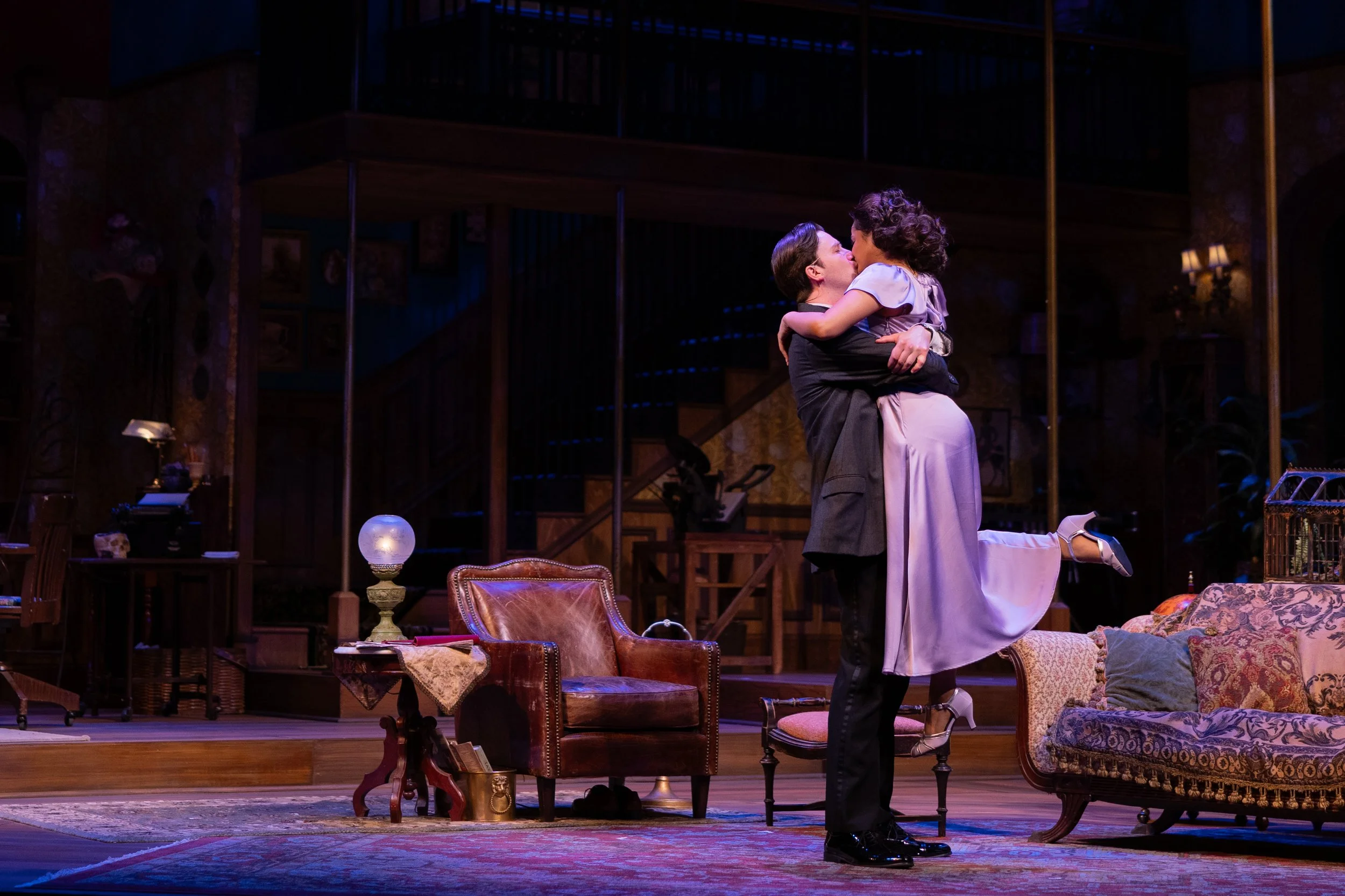
Romantic Evening Transition
Reorchestration of music can make any piece fit the niche that a show demands. Through this method, a concertina becomes a nod at the strange instrument taste of one of the family members while underscoring a romantic moment, ending as the young couple unlocks the front door and someone test fireworks elsewhere in the house.
Q: What does You Can’t Take It With You mean to you?
A: Sometimes, in theatre, we come across classics that everyone seems to know but us, which was my position for this production. It was instantly the buzz of the department as everyone prepared for the classic, heartfelt comedy. My draw into this show came from relating to the Vanderhof/Sycamore family. Being from Louisiana, I had many relatives whose family dynamics felt familiar to what we see in this play. Latching onto this connection, I began to explore the importance of both normalizing non-traditional family dynamics and highlighting the love and compassion that comes from people who society tends to other.
Q: How did you approach the show as a sound designer?
A: Going into a classic show can sometimes be difficult for a sound designer; plays were not often written with a soundscape in mind, and the only direct need for sound tends to come from practical effects and transition music. When in positions like that, I dig deep to find what moments I can push in place of a more generalized soundscape. For this show, I focused heavily on the large fireworks explosion and spatializing the instruments in each transition to add interest and beauty to the simplest scene changes.
Q: What was the outcome of the show?
A: The Clarence Brown Theatre is a prime venue for a show like You Can’t Take It With You. The audience loves a classic piece and the show plays straight, funny, and endearing. The team worked together so well, resulting in a tech process that felt two days long as we moved through the show with ease. It was a pleasant experience that challenged me to find the space for sound to benefit a production even when it cannot be present as much as we see in modern pieces. Challenging yourself to start with little guidance and try to create more is a valuable creative exercise I would recommend.