The Miraculous Journey of Edward Tulane
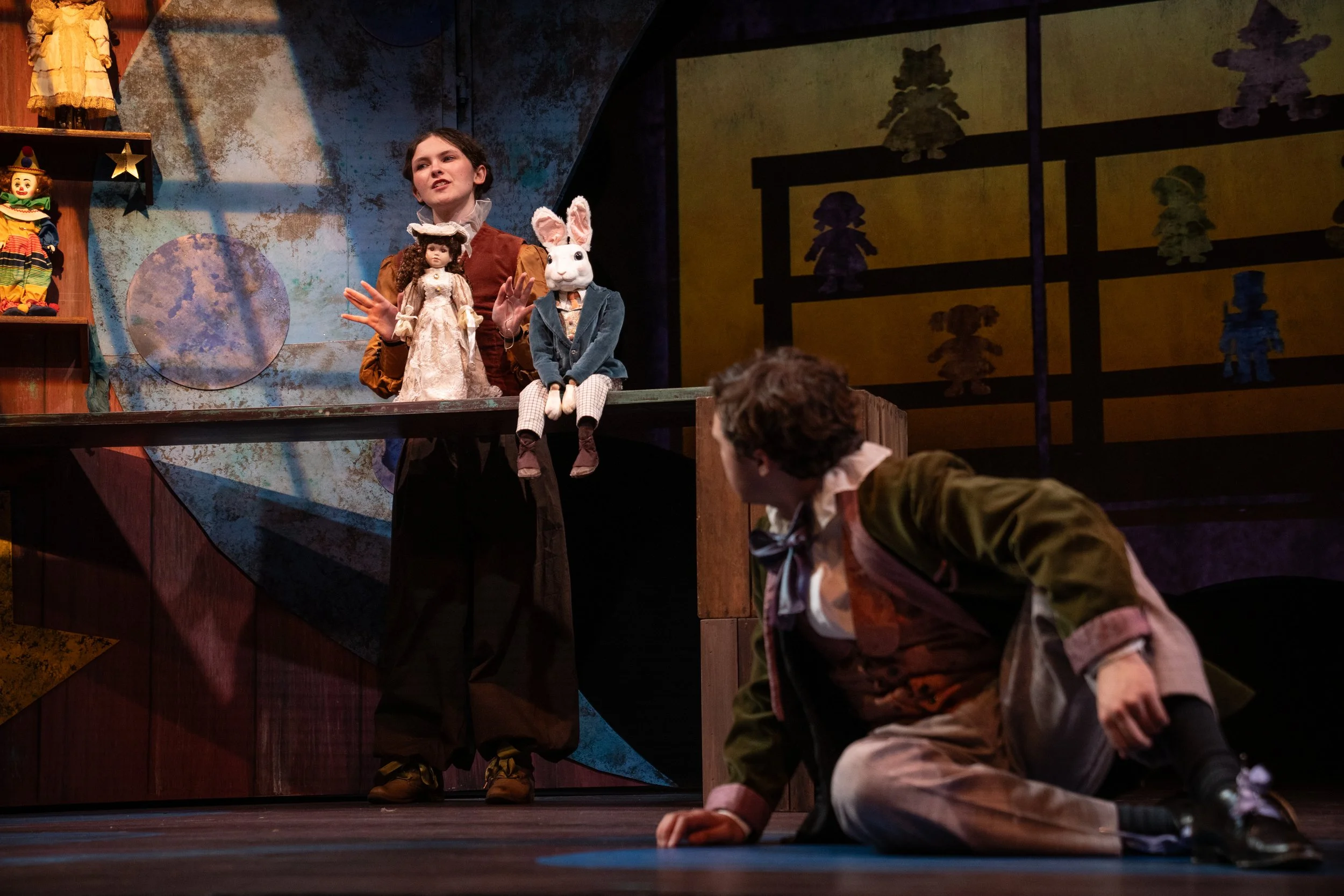
Synopsis: This story is a magical adventure that follows Edward, a self-obsessed porcelain rabbit doll who believes himself above everyone, as he is lost and carried across the United States. Through the bottom of the ocean, garbage dumps, farms, and cities, he meets a remarkable cast of strangers whose kindness, courage, and sorrow slowly reveal the magic of love to him. Filled with imagination, theatrical enchantment, and wonderful moments of tenderness, this story shows how a journey born of loss and hope can ultimately teach a closed heart the power to love.
Early Design Concept
Approaching this show felt like reading a fairy tale, with short scenes moving between radically different and subtly magical locations. This led me to follow that story flow, with a soundscape that is constantly moving forward and supporting the heart of each scene, from realistic cabin interiors to magical dreamscapes.
System Design
Artistic Team
Director: Casey Sams
Lighting Designer: Dallas J. Cook
Sound/Media Designer: Chance Beck
Scenic Designer: Skye Reid
Costume Designer: Amelia Strahan
Design Statement
Following meetings with the director and team, I refined the foundation of the design and created a design statement to guide the direction of my work:
To best tell such a fantastical story, my sound design uses the soundscape and underscoring to carry the audience through the story’s rapidly changing world. Environmental sounds establish each new location, which consist of both realistic and magical elements. Musical texture and motifs shape the emotional tone of each scene. The design continually moves forward with Edward’s journey, balancing realism with moments of theatricality to support the story’s tenderness, sense of exploration, and sense of connection.
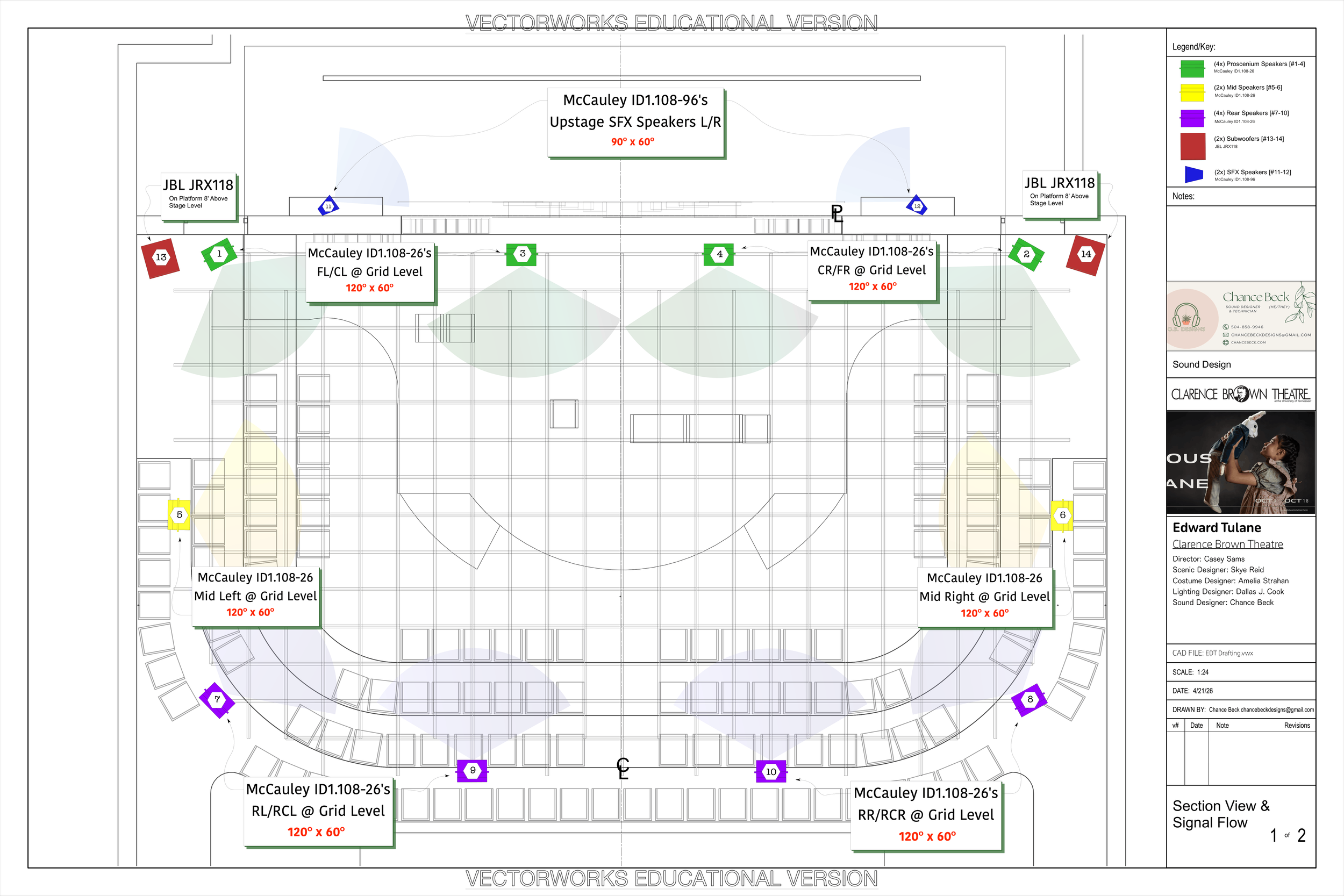
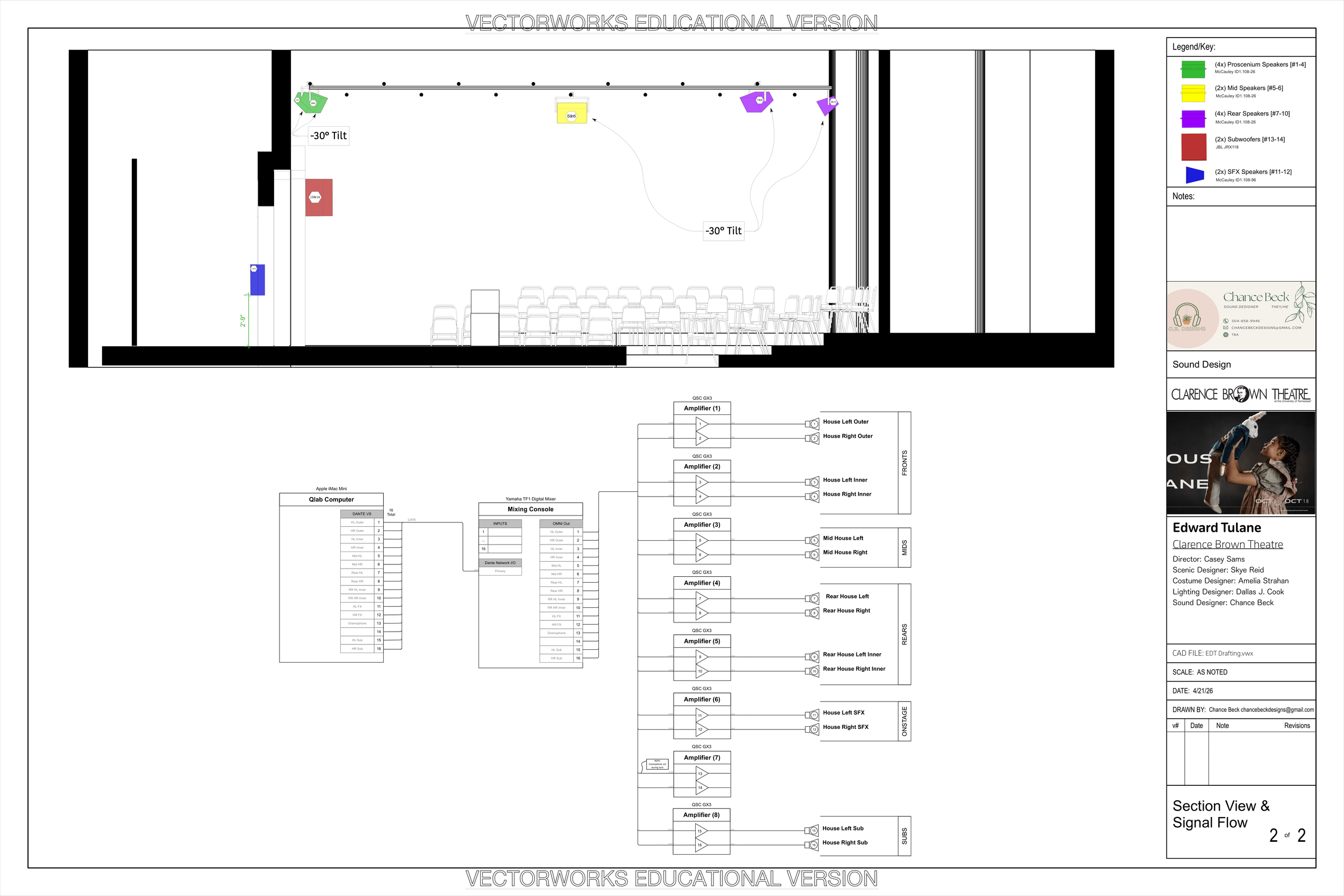
To support the intended younger audience of this production and to captivate the adults watching, the system focuses on complete immersion. I returned the same system from a previous production I designed - Failure: A Love Story - that was previously effective in surrounding and immersing an audience.
Research
While research for shows is often grounded in a time period and specific location, this story spans multiple years and places. This meant it was important to understand the tone we were trying to achieve for each scene and identify the elements that would most clearly establish location for the audience. I researched ocean liners, fishing villages, dump stations, farms, train yards and more. Through this research, I compiled elements that could be used to either reinforce the realism and placement of a scene or be modified to make a familiar location feel enchanted.
Collage
As this show focuses heavily on its narrative and journey, my collage was constructed to follow a rough outline of Edward’s adventure. Through this collage, I was able to demonstrate my understanding and vision of the narrative during preliminary design meetings. This aided in creating a collective understanding for the artistic team that alleviated the possibility of mismatched concepts popping up later in the process.
Working With Music
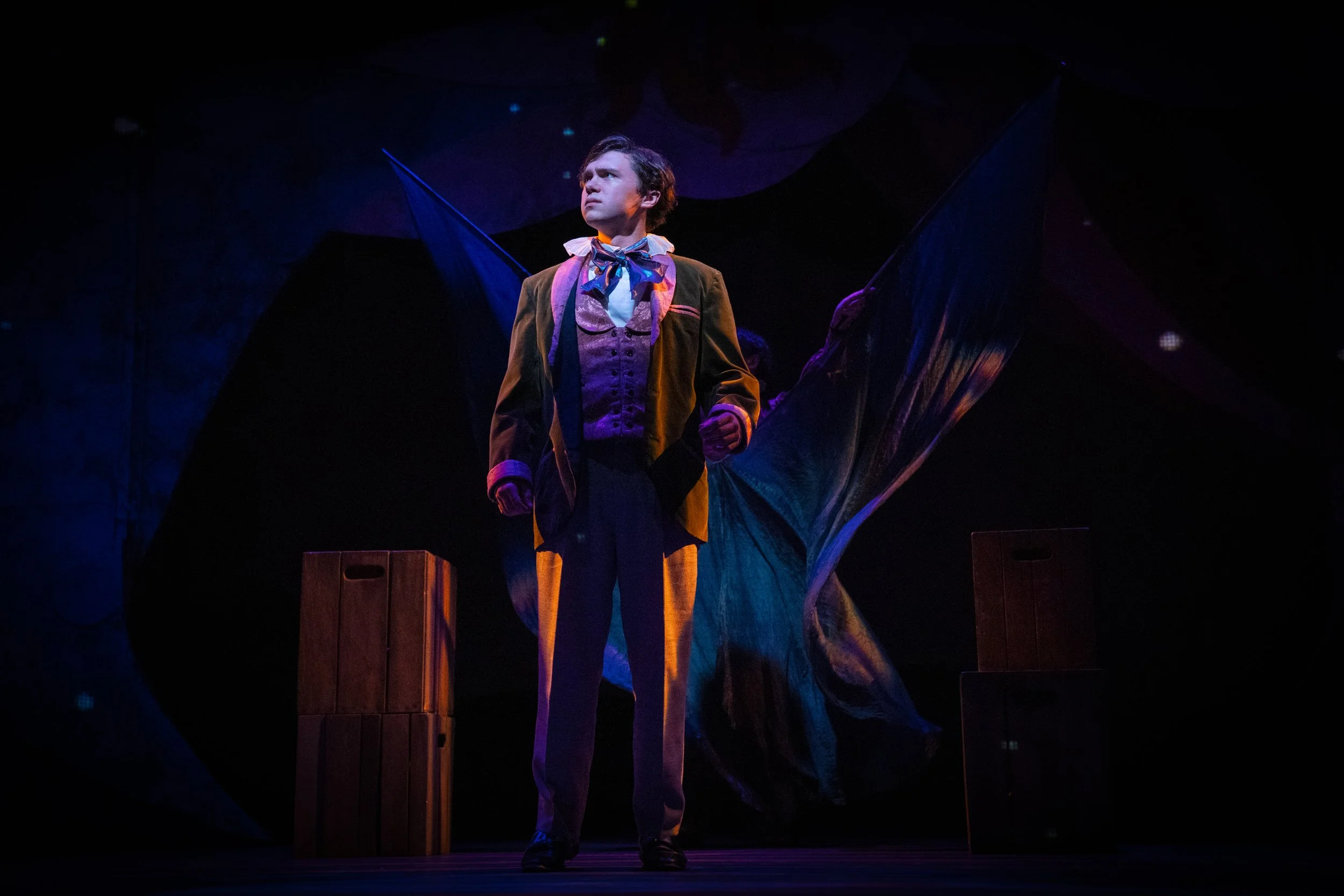
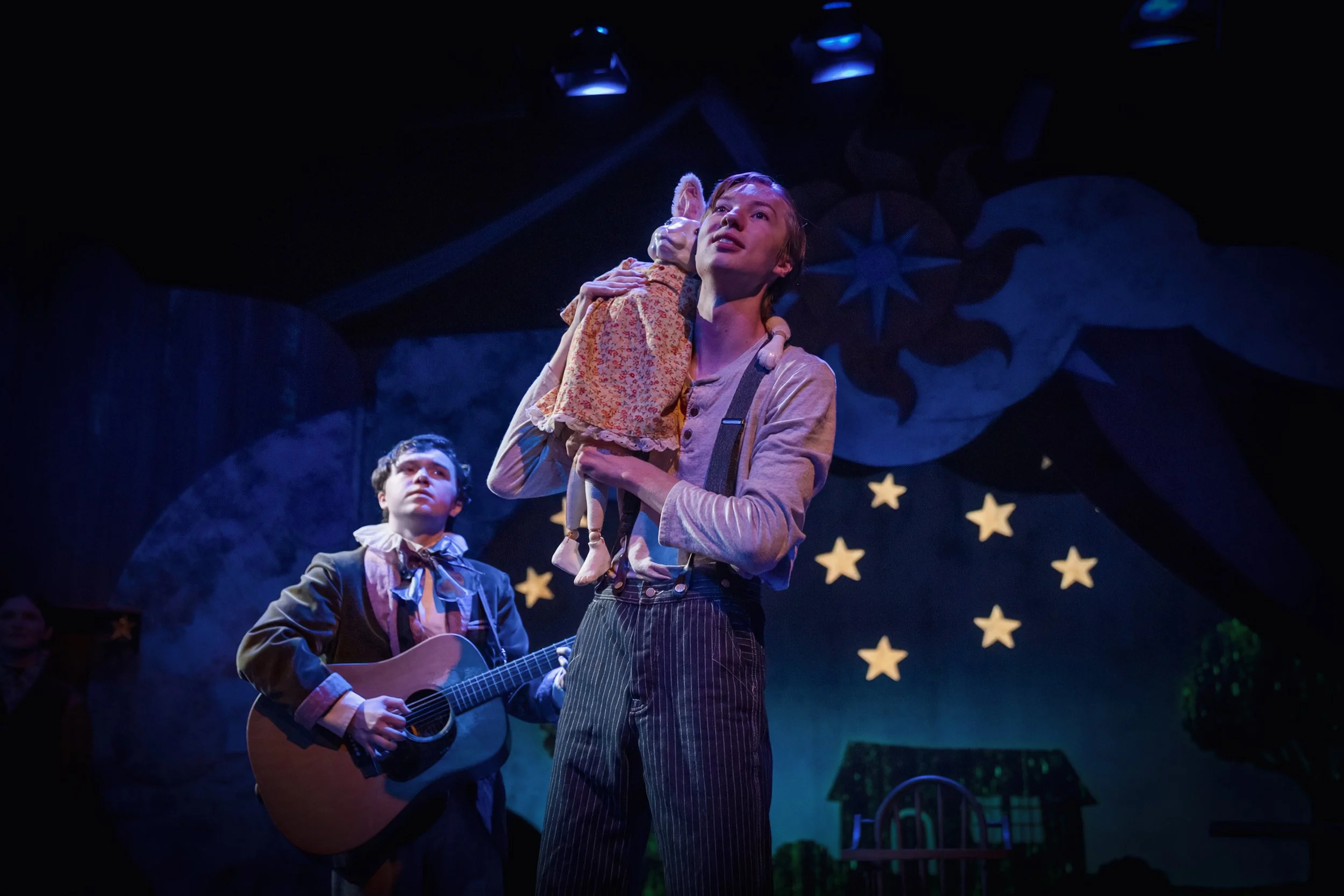
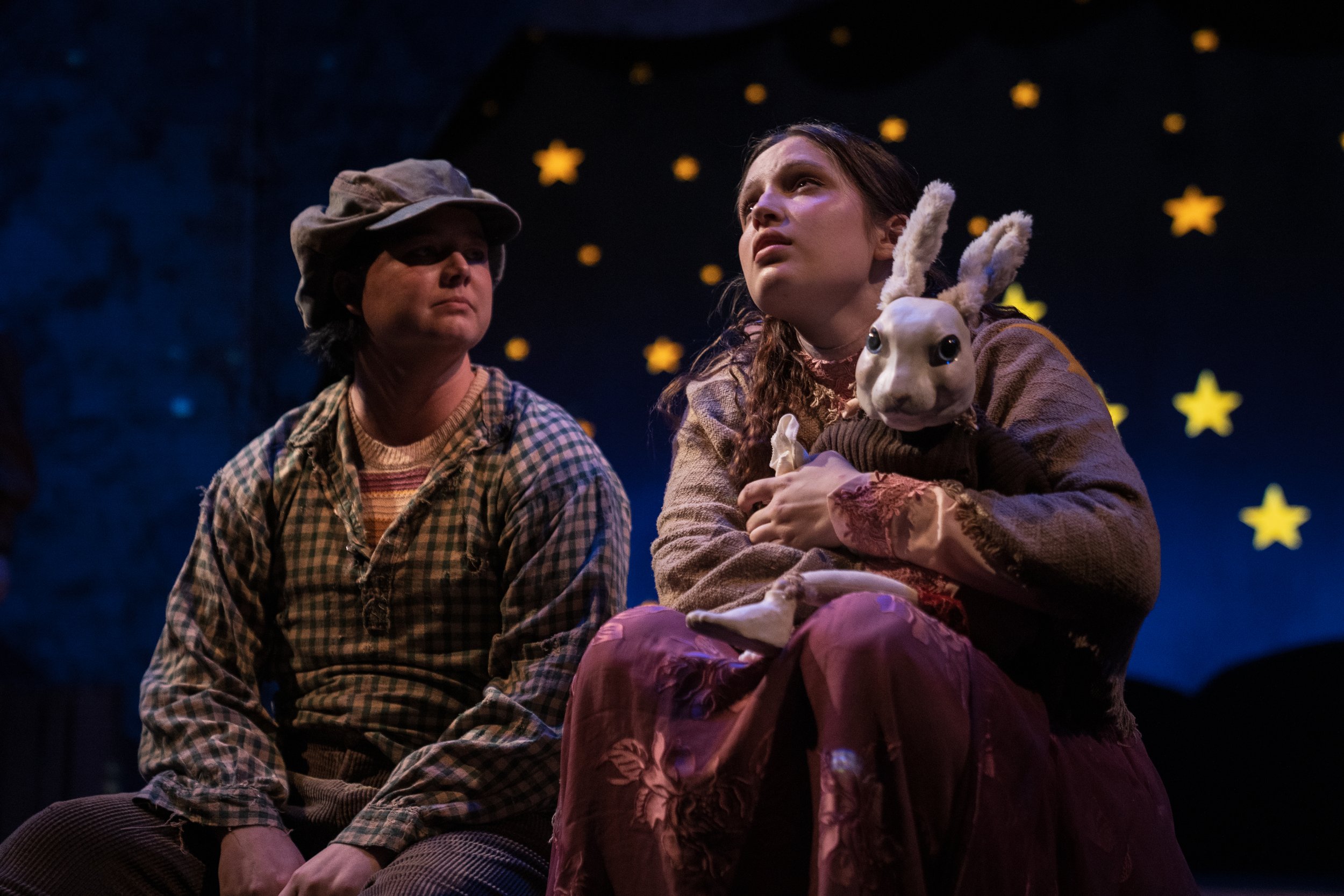
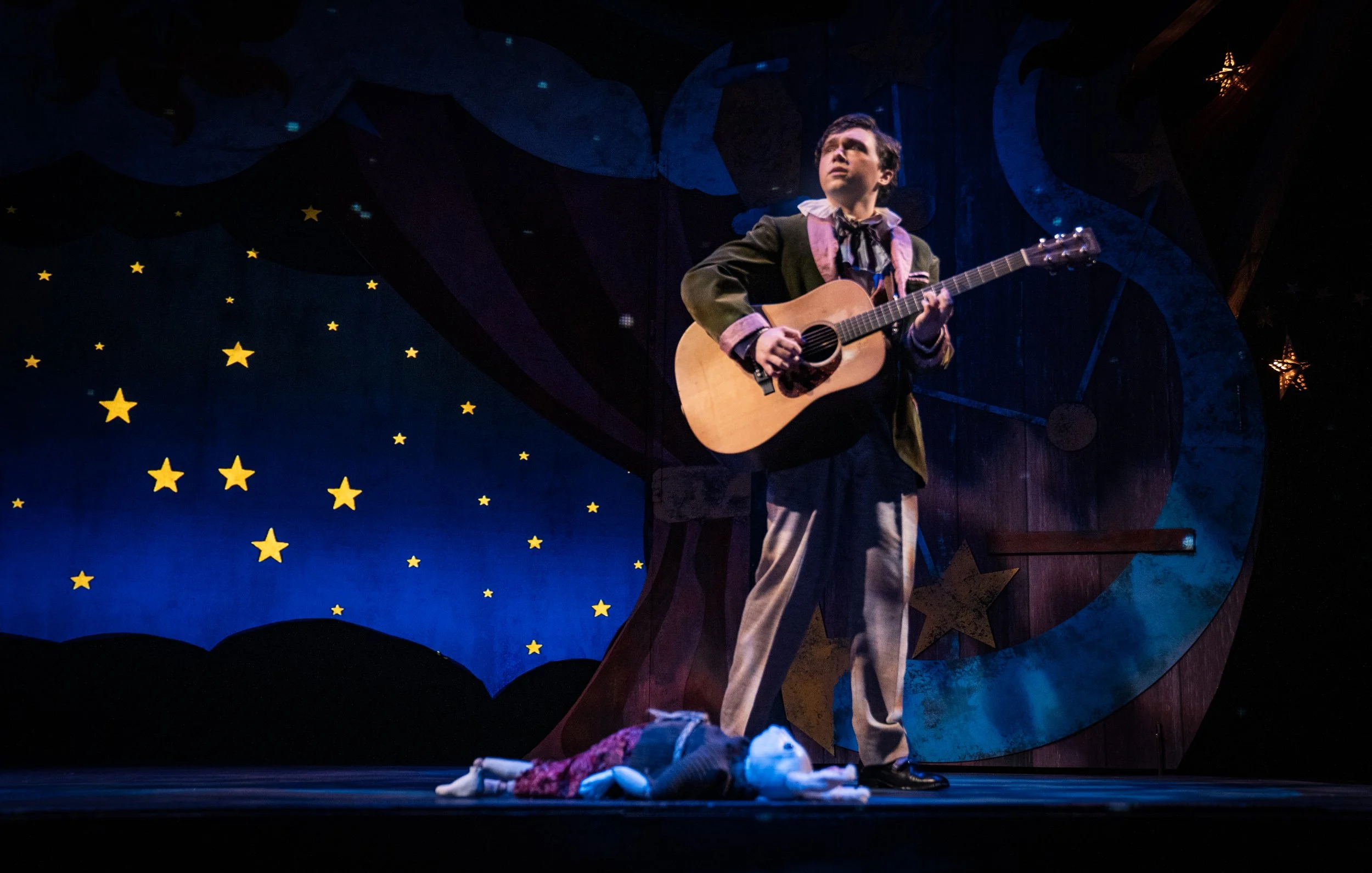
Edward in this play is embodied by a musician (named Musician) with a guitar, whom we used to great effect as a source of sound effects and underscoring. As the designer, I was responsible for working with the live musical elements and creating cues which could support the musician, primarily through tonal beds. Intimate moments of growth, such as stargazing, were accompanied by both the musician and a gentle tone which conveyed the twinkly, comforting beauty of the stars.
Bedtime Story
Before Edward is lost and his journey begins, he and Abilene are told a story by her grandmother. This soundscape played along with the story, giving life to the grandmother’s tale. The Musician used his guitar as a foley instrument, tapping, knocking, and scraping various parts of it to fit with the story’s action. Moments like the harp string breaking, knocking in the woods, and arrow shooting were all in time with the Musician making similar sounds on the guitar.
Content
This show was the most cue-intensive performance in our black box theatre in several years. To help alleviate this workload, my QLab programming for this production was automated or timed-out wherever possible. The Stage Managers in the space are always students who may be doing that job for the first time after training as ASMs, making this level of sophistication in the programming very important. As I designed both Sound and Media for this show, I linked the two QLab machines together and had them run off of one cue list, grouping video with audio cues frequently. This resulted in one board operator and very few cues for video that were not already bundled with audio, greatly streamlining the process.
Q&A
Starry Nights
The play is full of door bells, knocks, and other effects. By ensuring these effects stay within the period and are spatially accurate, the audience is kept immersed in the play while maintaining the story’s momentum.
A collection of some questions I have been asked about the show and my process.
Edward’s First Tragedy
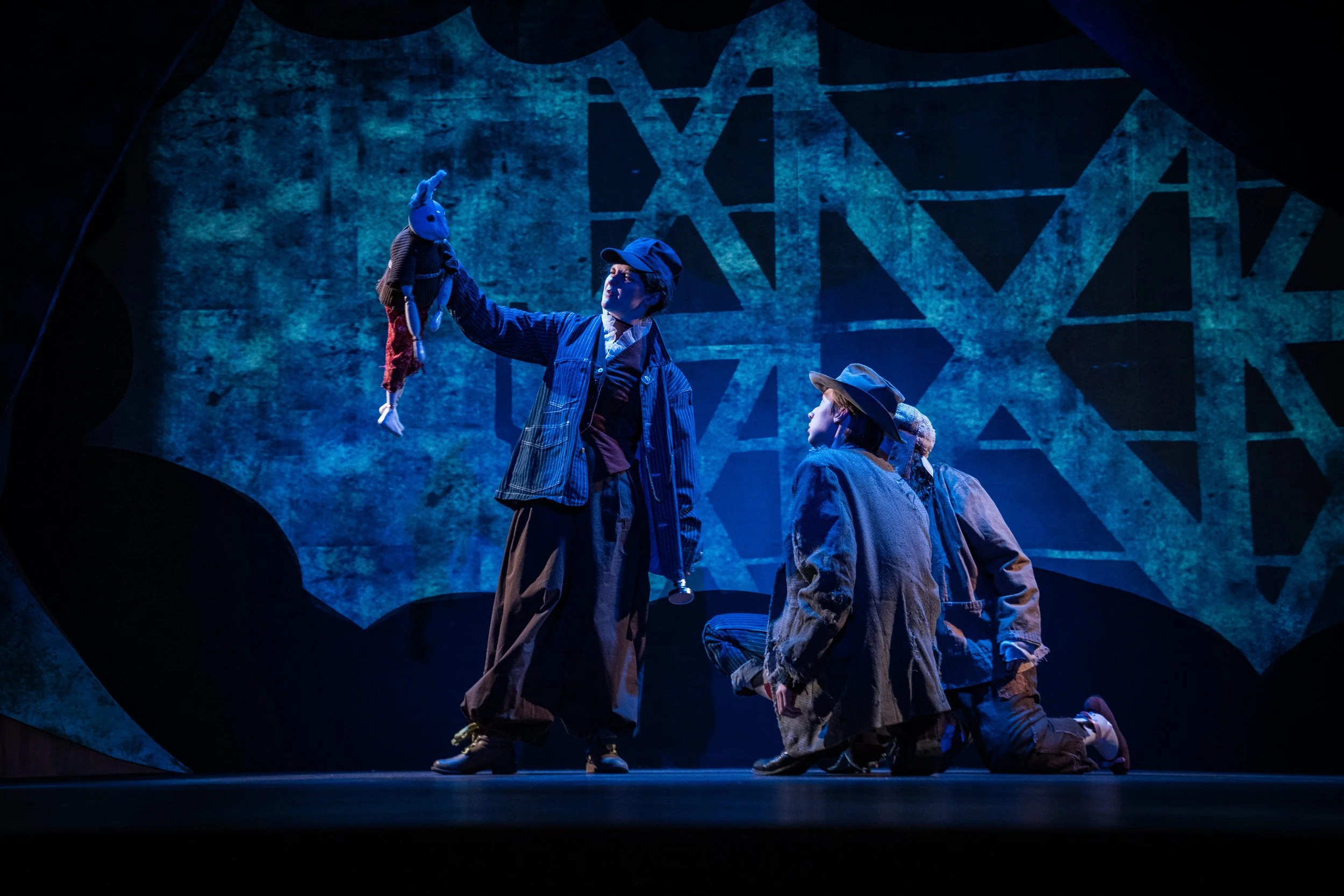
Edward’s first time being lost by his owner, the beginning of his adventure. This sequence follows Edward being thrown around by bullies and flying through the air in slow-motion before falling over the ship’s railing down to the bottom of the ocean. He is then picked up by a storm that brings him up to the surface and back down again before he is fished out by a kind fisherman that takes Edward back to the man’s village.
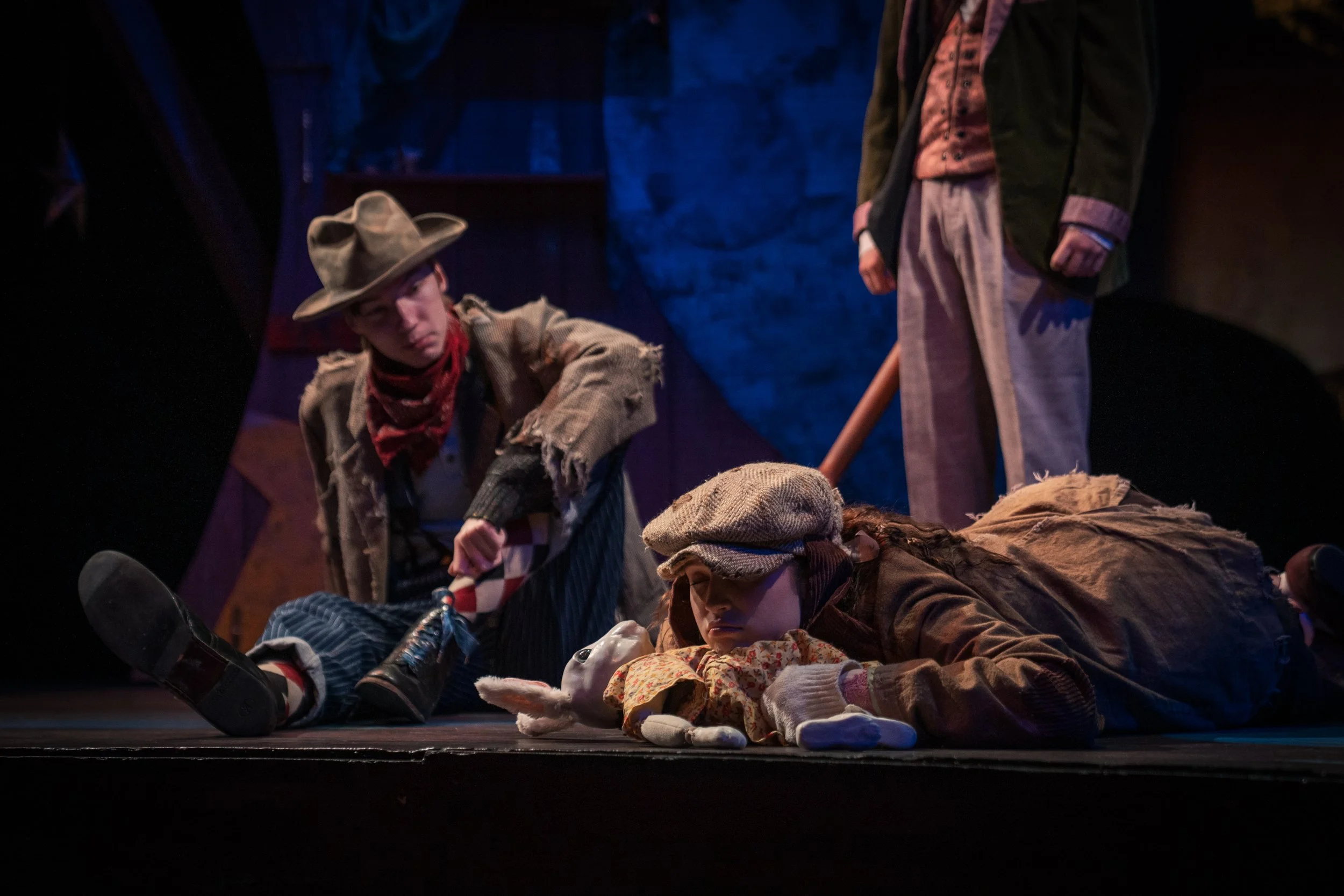
Lost Again
After traveling with an unhoused man and his dog, Edward is starting to show signs of true love and compassion after his hardships have softened his heart. However, when traveling in a train car that recently pulled into the station, they are awoken by a security guard who throws Edward off of the moving train.
Q: What does Edward Tulane mean to you?
A: One of the biggest issues in theatre that I think about often is how we can pull in a younger audience and grow a love of theatre in generations that are increasingly attached to technology and digital entertainment. As someone who personally struggles with neurodivergence and technology, I completely understand younger children who find no interest in live theatre and prefer the short-form content that is constantly being pushed on them. Shows like this, I believe, are the bridge for solving that issue. It has a mature message that treats the audience with respect and is not overly flashy to try and keep a younger mind's attention. It tells a beautiful story that is always moving and doing something interesting while telling that mature story.
Q: How did you approach the show as a sound designer?
A: Reading this script for the first time was definitely an experience. The show moves so quickly between locations and can exist in small cottages one moment and post-death dreamscapes the next. However, this is entirely exciting for a sound designer, especially with my interest in magical effects and soundscapes. I had to figure out how I could match the energy the show moved with and what elements of the soundscape could help support that journey without distracting from the path. I ultimately settled on having either ambiance tracks or underscoring through every scene to help with that constant stream of energy.
Q: What was the outcome of the show?
A: The show was received wonderfully. As a show for younger audiences that also had the most cues our black box space has seen in years, the show had broad appeal to those who were either drawn in by the technical aspects or touching story. It brought adults back to their own journey they have taken through life and made viewers think about the people they love and have lost in life. It was a pleasure to design for and is exactly the kind of production I hope to continue doing.